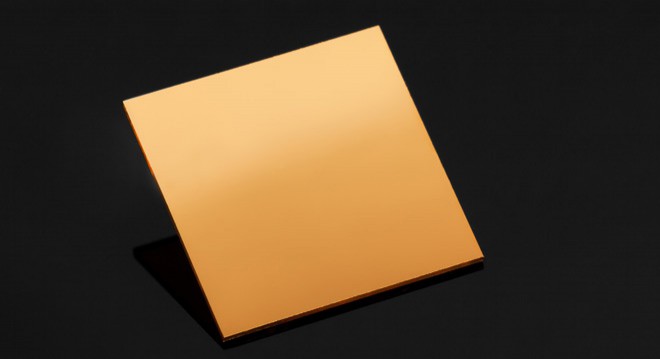
arrandee Au(111) gold substrate for self-assembled monolayers (SAMs)

Self-Assembled Monolayers on Gold (SAMs)

arrandee™ Au(111) gold-on-glass substrates provide the atomically flat, contamination-free gold surface that self-assembled monolayer (SAM) research depends on. Thiol- and alkanethiol-based molecules chemisorb onto the Au-S bond and organize spontaneously into a dense, well-ordered monolayer. That makes them well suited to biosensing, molecular electronics, corrosion studies, and surface functionalization work.

In stock, usual delivery time approx. 1-2 weeks (expedited delivery available for urgent requests)

Request SAM-Grade Substrates View Full Specifications

What Is a Self-Assembled Monolayer?

A self-assembled monolayer (SAM) is a single, densely packed layer of organic molecules that spontaneously organizes on a solid surface. On gold, this process is driven by the strong, selective affinity of sulfur for gold: thiol-terminated molecules (alkanethiols, disulfides, or other sulfur-anchored ligands) chemisorb onto the Au surface via an Au–S bond and pack together through van der Waals interactions between neighboring alkyl chains.

The result is an ordered, reproducible molecular film only a few nanometers thick, and its surface chemistry is defined entirely by the exposed tail group of the thiol used. That's what makes SAMs one of the most versatile tools for tailoring surface properties in nanotechnology, biosensing, and molecular electronics.

Why the Substrate Quality Matters

SAM quality is only as good as the gold surface underneath it. A rough, contaminated, or randomly oriented gold film produces disordered, defect-rich monolayers with unreliable electrochemical and optical behavior. Au(111)-oriented, atomically flat gold, with large terraces and minimal step-edge density, gives thiols the uniform template they need to pack into a dense, defect-poor, reproducible monolayer.

arrandee™ substrates are produced by adhesive-free physical vapor deposition of gold onto borosilicate glass, without titanium or chromium adhesion layers that could diffuse to the surface and disrupt the SAM. A short flame-annealing step immediately before use reconstructs the surface into extended Au(111) terraces, which is the same preparation routine used for STM- and AFM-grade substrates.

SAM Applications on arrandee™ Gold Substrates

From fundamental thiol chemistry to applied biosensor and electrode research

Typical SAM Applications

  • Biosensors: Thiol-anchored capture molecules (antibodies, DNA, aptamers) for label-free detection.
  • Molecular electronics: Alkanethiol and conjugated-molecule SAMs as tunnel junctions or molecular switches.
  • Electrochemistry: Blocking layers, redox-active SAMs, and impedance-based sensing on Au(111) working electrodes.
  • Surface science & STM/AFM: Model systems for studying molecular packing, phase behavior, and defect structure.
  • Corrosion & wetting studies: Tail-group chemistry used to tune hydrophobicity and protective coatings.

Why Researchers Choose arrandee™ for SAM Work

  • Au(111)-oriented, atomically flat terraces several hundred nanometers in size for reproducible, low-defect monolayers.
  • Adhesive-free deposition: no chromium or titanium adhesion layer to contaminate the surface.
  • Ready to use straight from sealed, inert-gas-flushed glass tubes. Flame-anneal and start your SAM incubation.
  • Cost-effective alternative to bulk gold single crystals, at over 80% lower cost for comparable surface quality.
  • In stock, fast turnaround: usual delivery time 1–2 weeks, expedited for urgent requests.

SAM Preparation Workflow on arrandee™ Substrates

A typical thiol-SAM protocol used by our customers. See our full preparation instructions for details

1

Flame Annealing

Anneal the substrate with a propane/butane torch to obtain clean, extended Au(111) terraces.

2

Cool & Immerse

Let the substrate cool briefly, then immerse it in your thiol/alkanethiol solution (typically 1–10 mM in ethanol).

3

Incubate

Allow self-assembly to proceed, typically 12–24 hours at room temperature, protected from light and dust.

4

Rinse & Characterize

Rinse with solvent to remove physisorbed excess, dry, and characterize by STM, AFM, contact angle, or electrochemistry.

This is a general guideline. Exact concentrations, solvents, and incubation times depend on your specific thiol and application, so always check the relevant literature for your system.

Related Substrates

Compare arrandee™ Au(111) with other common SAM substrate options

Gold on Glass (Au(111))

Our standard, ready-to-use SAM substrate. Atomically flat Au(111) terraces, in stock.

View Details

Substrate Comparison Guide

Gold-on-glass vs. gold on mica vs. Au(111) single crystal vs. template-stripped gold.

Compare Substrates

Silver & Platinum Substrates

Same borosilicate glass base, coated in silver or platinum for electrochemistry and catalysis applications.

View Product Range

Frequently Asked Questions

Common questions about self-assembled monolayers on gold

Why is gold used for self-assembled monolayers?

Gold forms a strong, selective bond with sulfur, which allows thiol- and alkanethiol-terminated molecules to spontaneously chemisorb onto the gold surface and self-organize into a dense, well-ordered monolayer. Gold is also chemically inert under ambient conditions, so the underlying substrate does not oxidize or interfere with the SAM.

What makes a gold substrate suitable for SAM formation?

The gold surface should be Au(111)-oriented and atomically flat, with large, continuous terraces and low surface roughness. Contamination-free deposition and a clean surface immediately before SAM incubation are essential for a reproducible, defect-poor monolayer.

Do I need to clean or anneal the substrate before forming a SAM?

Yes. We recommend flame-annealing arrandee™ Au(111) substrates with a propane/butane torch immediately before immersing them in your thiol solution. This removes surface contaminants and reconstructs the gold into large, atomically flat (111) terraces, giving the most reproducible SAM quality.

Which molecules can be used to form SAMs on arrandee™ gold substrates?

Alkanethiols and other thiol-terminated organic molecules are the most common choice, but any sulfur-anchored ligand (disulfides, sulfides, xanthates) can be used. The choice of tail group and chain length determines the final monolayer's surface chemistry, packing density, and function.

Can arrandee™ substrates be used for electrochemistry with SAMs?

Yes. Au(111) gold-on-glass substrates are widely used as working electrodes in electrochemical SAM studies, including impedance spectroscopy, cyclic voltammetry, and blocking-layer experiments, thanks to their flat, reproducible, and well-defined crystallographic surface.

Trusted by Research Groups At
University of Zaragoza logo IBEC Institute for Bioengineering of Catalonia logo Bangor University logo Newcastle University logo Université libre de Bruxelles logo University of Namur logo